



The Decision Behind parcel locker compartment sizes
At YS LOCKER, we see that hardware conversations move faster when the operating question is already clear. How should operators select a parcel-locker door mix from real parcel profiles instead of a generic count of compartments? The goal is not to make a universal promise about one cabinet, software package, or installation method. It is to give overseas B2B buyers a disciplined way to define the project before they compare quotations.
A parcel locker is part of an operating workflow. The workflow includes the operator, delivery team, site team, recipient, and sometimes a separate software or integration partner. When those roles are not defined, a project can have a cabinet layout but no reliable agreement on handover, exceptions, information flow, or acceptance. We recommend recording the expected workflow in plain language and treating it as a design input.
Start With the Operating Brief, Not a Standard Layout
The useful starting point is not a generic compartment count. It is a written operating brief that captures parcel dimensions, peak arrival patterns, oversized-item frequency, delivery workflow, site footprint, and the need for a future layout change. When these inputs remain assumptions, the design discussion often becomes a comparison of cabinet appearance rather than a decision about how parcels will move through the site. A practical brief states who loads the cabinet, who collects parcels, which periods create pressure, and what happens when an item does not fit the expected compartment.
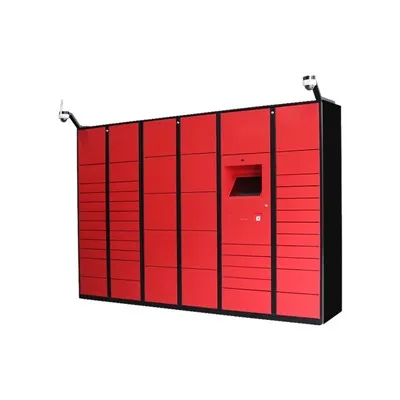
For parcel projects, a common physical structure is one master cabinet with one or more slave modules. YS LOCKER can review cabinet dimensions, door sizes, door count and module layout according to the project. We do not treat a standard combination as a substitute for the operator's parcel profile. The final structure, door sizes, finishes, terminals and software boundary should be confirmed in the project technical solution.
Turn Demand Into a Reviewable Layout
Start with the question that is closest to the buyer's real risk. For this topic, that is small, medium, large, and oversized parcel demand together with courier behavior, resident expectations, and the usable cabinet footprint. Build a short table that lists the current condition, the owner who can confirm it, the evidence available, and the decision still needed. This produces a clearer request for quotation and a more useful technical review.
The table should not stop at the cabinet. It should cover the physical layout, delivery and collection sequence, terminal devices where required, network and power conditions, operating software, and the site team's role after commissioning. Where a function belongs to the customer's platform or a third-party platform, identify it clearly. Where it is a project-specific customization request, identify it as a request rather than a standard claim.
Questions That Belong in the Quotation Request
Before a commercial proposal is finalized, buyers should be able to answer these questions:
1. What is the actual user and operator workflow at this site?
2. hich cabinet layout, door mix, terminal devices, and site conditions are required for that workflow?
3. Which party owns software, data, notifications, access rules, and exception handling?
4. What drawings, protocol files, artwork, or site documents are available for review?
5. Which items still require confirmation by the customer, site owner, or local project team?
This approach is especially important for multi-party projects. The same cabinet can be part of a residential, retail, campus, commercial-property, or carrier-operated workflow, but the responsibility model will not be the same. A clear brief keeps the equipment scope aligned with the operation that will use it.
What YS LOCKER Can Review
We provide smart locker hardware and can review project-specific cabinet configuration for parcel locker applications. Based on confirmed project requirements, we can discuss the cabinet and door layout, master-and-slave structure, colors and surface graphics, relevant electronic hardware, installation context, and software or system-integration boundary.
Where an operator has its own software or works with another platform, we can review lock-control board API or protocol requirements for the project. Where terminal software, cloud management, status information, reporting, access methods, or other functions are requested, their actual scope must be defined in the technical solution. This distinction helps buyers avoid treating a proposed option as a universal product feature.
FAQ
Q: Is this a fixed configuration for every parcel locker?
A: No. Cabinet structure, door mix, electronics, software scope, and installation approach are confirmed for the project. The purpose of this guide is to help buyers prepare the right inputs before configuration review.
Q: Can YS LOCKER work with an existing operating platform?
A: For projects using customer-owned or third-party software, we can review lock-control board API or protocol integration. The responsibilities, fields, workflows, and test scope must be confirmed with the relevant project parties.
Q: What should be shared before requesting a quotation?
A: Share the operating scenario, site plan or photographs, estimated parcel profile, cabinet and door requirements, power and network conditions, selected electronic devices, software ownership, and any available interface or brand documents.
Q: Are images or screens required before the technical review?
A: They are helpful when the project includes a particular layout, visual identity, terminal interface, or installation condition. They should be treated as project inputs and approved alongside the technical requirements.
Q: Plan the Brief With YS LOCKER
A: A stronger parcel locker project starts with an agreed operating brief, then moves into configuration, technical confirmation, and quotation. YS LOCKER can review the information for parcel locker compartment sizes and discuss the hardware and integration boundary that fits the confirmed project scope. provide a sample of parcel dimensions and peak-day volume so we can review a project-specific door mix and cabinet layout.