

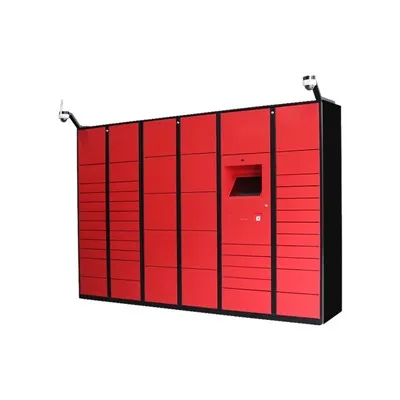


The working principle of smart lockers is to achieve self-service storage and intelligent management of items by integrating various electronic, communication, and control technologies. The core lies in using sensors, identity authentication systems, and network communication to link the physical locker with the back-end management system.
The main working principle steps are as follows:
Identity Authentication and Unlocking: Users send instructions for storing or retrieving items to the locker through preset methods (such as scanning a barcode, swiping a card, fingerprint recognition, or facial recognition). After the locker control system verifies the identity information, it drives the corresponding compartment's electronic lock to open.
Item Status Detection: Each compartment is equipped with sensors (such as infrared, RFID, or weight sensors) to monitor in real-time whether there are items inside. After a storage or retrieval action is completed, the system updates the compartment status (empty/full) and synchronizes it with the back-end system.
Data Transmission and Management: Information about storage and retrieval operations is uploaded to a cloud server via a network module (such as 4G/WiFi), enabling remote monitoring, usage statistics, and anomaly alerts. Administrators can remotely control, query data, or set permissions through the management platform.
Emergency and Safety Mechanisms: The locker is equipped with an emergency unlocking device for power outages (such as a mechanical key or backup power supply) to ensure that users can still access items during a blackout. Some high-end models also support encrypted passwords, dual CPU control, and electromagnetic compatibility design to enhance security and stability.
Common Technology Types Include:
Barcode Type: Prints a password strip when storing an item and scans the barcode to unlock the compartment when retrieving it.
RFID Type: Items or cards have built-in RFID tags, and the locker reader/writer automatically recognizes the tag to complete storage or retrieval.
Biometric Type: Uses fingerprints or facial recognition as a unique credential for higher security.
Networked Smart Type: Integrates a network module, supporting remote management, segmented billing, and data reporting functions.
Working Principle Of Smart Lockers
Jan 03, 2026
Leave a message