

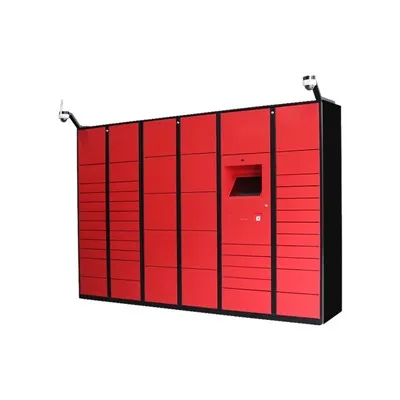


Choose the Access Model Around Hotel Operations
Hotels usually need to manage several luggage moments: a guest arrives before check-in, a guest leaves before a flight, a room is not ready, or a group arrives at a different time from its room allocation. The locker is part of this service journey. Procurement teams should first map who places the luggage, who receives the access credential, who can open a compartment later, and who handles a failed or disputed access event.
Self-service access can be considered when the guest can receive clear instructions and the service area is easy to find. Staff-supported access can be considered when the hotel wants front-office control over specific compartments, group luggage, or exception handling. A hybrid model may combine guest access for routine storage with controlled staff access for support cases.
Access Methods Should Match the Guest Experience
Depending on the venue and project requirements, smart locker access may use a self-set password, a card, face recognition, fingerprint recognition, a wristband, or a mobile QR code. A hotel should not select a method only because it is technically available. It should also consider guest familiarity, privacy, language support, reception workload, identity verification, and what happens when a guest loses the access credential.
At YS LOCKER, we confirm the access method as part of the project specification. The selected method should be connected to the chosen software or local operation process. If the hotel uses its own software or a local provider, the lock-control board interface can be reviewed for integration. If YS LOCKER software development is requested, the required functions and interface should be agreed before development.
Define Staff Permissions and Exceptions
Hotel buyers should prepare a clear exception table before approving the locker. It should cover lost access, a guest who cannot open the door, a compartment that appears occupied, a late collection, an emergency, and a dispute about the luggage. The table should identify who can intervene, how the action is recorded, and whether the guest must be present.
Every YS LOCKER cabinet is designed with an emergency mechanical opening option so that a key can be used when there is a power or network problem. The hotel still needs its own policy for key custody, staff authorization, incident review, and guest communication. The hardware option does not replace an operating policy.
Plan the Software Boundary
Some hotels may connect the locker to an existing property-management or guest-service workflow. Others may use a local locker application. YS LOCKER can provide a lock-control board API, terminal software, or server interfaces according to project requirements. The buyer should confirm which party manages guest accounts, notifications, staff permissions, records, and support. These functions should not be assumed from the cabinet alone.
FAQ
Is self-service always better for a hotel?
No. Self-service can help routine storage, but staff support may still be needed for groups, late collection, lost access, and exceptional guest requests. A hybrid model can be evaluated against the hotel's operating policy.
Can a hotel use cards or mobile QR codes?
These access methods can be considered depending on the project. The final method should be confirmed with the guest journey, software, privacy requirements, and operating environment.
How should emergency opening be managed?
YS LOCKER equipment includes an emergency mechanical opening option. The hotel should define who keeps the key, who may use it, how the action is documented, and how the guest is supported.