



Start With Responsibility, Not Cabinet Appearance
The first question for a property operator is not how many doors look attractive in a product catalogue. It is who is responsible at each step. A carrier may deliver a parcel, a property team may manage a shared service area, and a resident may collect the parcel later. These roles should be documented before the locker configuration is approved.
A useful brief should define delivery loading, resident notification, collection access, overdue parcels, damaged parcels, failed access, and support escalation. It should also state whether the locker is managed by the property, a carrier, an e-commerce operator, or a separate service provider. Clear ownership reduces the risk that staff are expected to solve problems that belong to another party.
Define the Resident and Delivery Flows
For a standard parcel workflow, the delivery user may identify an account or delivery permission, select the relevant compartment, and place the parcel inside. The resident may then use a QR code or collection code to open the assigned door. The exact sequence depends on the operator software and local service rules, so it should be confirmed in the project specification rather than assumed.
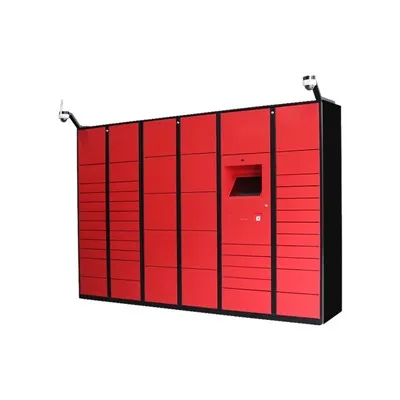
At YS LOCKER, a common parcel-locker configuration uses one master cabinet with one or more slave modules, often in a one-to-one, one-to-two, or one-to-three combination. Door dimensions can be customized to the operator's parcel standards. The cabinet can be connected through a local network, and a 4G module may be considered where a stable wired connection is not available.
Plan Software and Integration Early
Many local parcel operators already have their own software or work with a local technology provider. In this model, YS LOCKER supplies the equipment and the lock-control board interface or API so the customer's software can control the doors. We can also provide terminal or server interfaces according to the agreed project scope. If the customer requires YS LOCKER to develop the software, the functions and interface are defined before development begins.
This distinction matters for a residential parcel locker service. The hardware may support a workflow, but resident accounts, notifications, property permissions, reports, and escalation rules are normally part of the deployed software and service operation. Buyers should request a written interface boundary and a test plan before installation.
Installation and Site Questions
The equipment area should have a clean, level floor and a suitable local power connection. A wired network is preferred for stable operation; a 4G network module may be used when the project design allows it. In locations exposed to strong wind or a risk of impact, the buyer should also confirm the floor construction and fixing method. These are site responsibilities that should be reviewed with local contractors and the property team.
Public parcel-locker services are also a useful market reference for understanding why access, collection, and service ownership need to be planned together. YS LOCKER uses these public signals as buyer context, not as evidence of a YS LOCKER customer project.
FAQ
Can a residential parcel locker use a property operator's existing software?
It can be considered when the software can work with the confirmed lock-control board interface or API. The integration scope, data exchange, user permissions, and testing responsibility should be agreed before production.
Can compartment sizes be customized?
Yes, parcel-door dimensions can be developed around the operator's standard parcel sizes and site capacity. The final combination should be confirmed from the delivery profile and available installation area.
What happens if the network is not stable?
A wired network is preferred. Where the project permits, a 4G module can be considered. The operator should confirm local coverage, data responsibility, and the offline or exception process.