

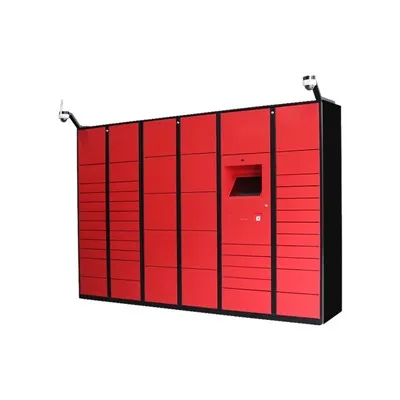


Ensure Safety and Order of Items: In environments such as factories and workshops, employee lockers are used to store work clothes, tools, and personal belongings, preventing loss of items, equipment contamination, or workplace disorder, and ensuring the work area remains tidy and organized.
Improve Access Efficiency and Smart Management: Intelligent lockers in places like schools, airports, and train stations commonly use facial recognition, QR code scanning, card swiping, or password verification for self-service access, reducing the need for manual intervention, and supporting remote monitoring, anomaly alerts, and access record tracking.
Adapt to Special Environmental Requirements: Factory lockers need features such as moisture-proof, corrosion-resistant, and high-temperature resistance to handle high humidity, high temperature, or dusty workshop conditions; luggage lockers emphasize compartmentalized space (small/medium/large compartments) and 24/7 service to meet travelers' short-term storage needs.
Optimize Space Utilization and Operational Efficiency: Intelligent systems can dynamically allocate locker compartments to improve space utilization and use data management to achieve inventory visibility, suitable for storage tool cabinets, corporate changing rooms, and similar scenarios.
Main Functions Of Dedicated Storage Lockers
Jan 10, 2026
Leave a message