

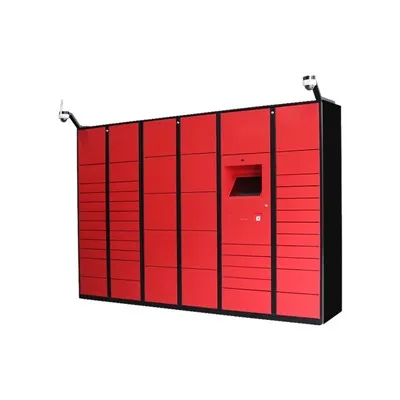


Open parcel locker networks are becoming a more important part of last-mile delivery planning because buyers increasingly need infrastructure that can serve more than one carrier, user group, or collection workflow. Public announcements in the European locker market show continued investment in network-scale deployments. For project owners, the useful takeaway is not another supplier claim. It is a practical planning question: can the locker hardware, access rules, software boundaries, and site workflow remain workable as the network gains new delivery partners?
At YS LOCKER, we help buyers turn that question into a clear project brief. The right answer depends on the intended operating model, local regulations, user journey, and confirmed integration scope. A cabinet with more doors is not automatically a multi-carrier solution. The network must also define who loads parcels, how recipients are identified, how exceptions are handled, and which party owns the records.
|
Industry context: This article uses public European market activity as a verified signal only. It does not describe a YS LOCKER customer project or claim compatibility with any third-party network. |
Why an Open Network Changes the Buying Conversation
A single-operator locker can be designed around one loading process, one notification method, and one support team. An open parcel locker network has more moving parts. Several carriers or local partners may need to load, collect, service, or support the same installation. Property owners may also require separate permissions for building staff, residents, couriers, and maintenance technicians.
That is why a network project should begin with operating rules rather than a door-count request. Buyers should define the handover journey from carrier arrival to recipient collection, including what happens when a parcel does not fit, a user cannot open a compartment, or an item remains uncollected. Those answers affect compartment mix, access credentials, screen flow, notification requirements, service access, and the data that needs to be retained.
Five Decisions to Make Before Selecting Hardware
1. Define who uses the locker and in what role
List each role separately: carrier, site operator, recipient, administrator, maintenance technician, and temporary support person. Each role may need a different authorization level. For example, a carrier may need loading access during a defined delivery window, while an operator may need visibility into overdue parcels and door exceptions. A clear role map prevents a project from treating every user as the same type of account.
2. Map the parcel flow, including exceptions
Normal collection is only one part of the workflow. Buyers should decide how the network will manage oversized parcels, failed loading, returned items, overdue collection, damaged deliveries, and a door that does not open on the first attempt. A documented exception flow helps determine whether a mixed compartment layout, a staffed fallback point, or a remote support process is needed.
3. Separate hardware scope from software and integration scope
Multi-carrier delivery projects often involve existing carrier systems, property platforms, identity tools, or local software partners. Before requesting a quotation, define what the locker is expected to do on its own, what is handled by an external platform, and what information must pass between systems. API availability, data ownership, notification logic, access methods, and support responsibility should be confirmed in writing. We recommend treating integration as a project workstream, not as an assumed feature.
4. Plan the compartment mix from real parcel profiles
Network capacity is not only about the total number of doors. Review the expected parcel-size distribution, daily dwell time, peak delivery periods, and any special flows such as returns or oversized items. A balanced mix of small, medium, and larger compartments can make better use of a given footprint than a uniform cabinet design. The final configuration should be based on actual project data wherever possible.
5. Treat the site as part of the system
Placement affects adoption, safety, and operating cost. Confirm delivery-vehicle access, user circulation, visibility, lighting, power, connectivity, weather exposure, anchoring requirements, and maintenance access before finalizing the cabinet layout. For residential, campus, retail, and transport locations, the best collection point is usually the one that works for both the carrier workflow and the end-user route.
What Buyers Should Ask About Daily Operations
Once the network expands, routine operating questions become more important than a product brochure. Who can see compartment status? Who receives opening or pickup records? Who responds if a courier needs help at the site? Who can change a holding time or reassign a compartment? These questions should have an agreed owner before go-live.
For YS LOCKER projects, we can discuss configurable access methods, cabinet layouts, operator workflows, and the integration requirements that need to be validated with the project team. We do not present every network as identical, and we do not promise third-party software functions that have not been confirmed for the specific project. This approach helps buyers compare solutions on operating fit rather than on generic feature lists.
Build a Network Brief That Can Scale
A scalable brief should document the initial site, likely expansion sites, parcel profile, loading roles, user groups, access methods, required data records, exception policy, language needs, installation conditions, and expected responsibility split. It should also identify which requirements are fixed at launch and which may change as new partners join.
With that information, YS LOCKER can help buyers evaluate a modular hardware configuration and clarify the interfaces that need technical review. The goal is not to over-specify a first site. It is to avoid selecting a cabinet or workflow that blocks sensible growth later.
FAQ
Can one parcel locker serve more than one carrier?
It can be planned for more than one carrier when the project defines access permissions, loading rules, data ownership, and the software or integration boundaries. Compatibility must be confirmed against the actual operating model and systems involved.
What information is needed before requesting a multi-carrier locker quotation?
Provide the site location, expected users, parcel-size profile, peak volume, carrier workflow, access method, power and network conditions, preferred compartment mix, branding needs, and any software or integration requirements.
Do all parcels need the same compartment size?
No. A mixed compartment layout is often more practical when parcel sizes vary. The right mix depends on real parcel data, dwell time, and how oversized or exception parcels will be handled.
What should happen when a parcel is not collected?
The project should define holding periods, reminders, operator escalation, return or reallocation rules, and the records needed for audit. These rules should be agreed before launch rather than improvised after an exception occurs.
Plan the Operating Model Before the Network Grows
An open parcel locker network is a delivery operating model as much as it is a hardware purchase. When buyers start with user roles, parcel flow, exception handling, site conditions, and confirmed integration boundaries, they create a stronger basis for selecting the locker configuration. If you are planning a multi-carrier parcel locker project, YS LOCKER can help you structure the hardware, workflow, and project questions that should be resolved before deployment.
CTA: Contact YS LOCKER with your site plan, parcel profile, user roles, and integration requirements to discuss a practical parcel locker configuration for your project.
Internal Link Suggestions
Parcel Locker product page - anchor text: custom parcel locker solutions
Residential Parcel Locker page - anchor text: residential parcel delivery lockers
Smart Locker Software page - anchor text: smart locker software and integration planning
Contact page - anchor text: discuss your multi-carrier locker project
Image Notes
Hero image: A clean, high-resolution YS LOCKER parcel locker installation in a mixed-use or transport-adjacent location, photographed at a slight three-quarter angle. Alt text: Open parcel locker network planned for multi-carrier delivery.
Supporting image: A simple original workflow graphic showing carrier loading, secure notification, recipient pickup, and operator exception handling. Keep all labels as editable webpage text, not embedded inside the image. Alt text: Multi-carrier parcel locker operating workflow.
Detail image: A close-up of a parcel locker interface and mixed door sizes, with no third-party logo. Alt text: Mixed compartment parcel locker configuration for delivery projects.
Source Verification - Internal Reference Only
Public industry signal reviewed on 2026-08-14: Bloq.it announcement regarding a multi-year locker supply partnership with InPost in Europe. The source is used only to support the market context; no third-party project is represented as a YS LOCKER case.