

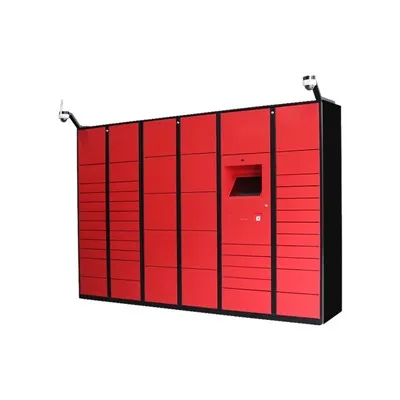


Low-infrastructure parcel locker deployment is drawing attention from buyers who need secure pickup points at sites where grid connection, civil works, or permanent construction are difficult. A public 2025 product announcement in the parcel locker market described a solar and battery-supported outdoor locker designed to reduce dependence on a conventional grid connection and anchoring. For YS LOCKER buyers, the broader lesson is practical: a difficult site should be evaluated as a complete operating environment, not simply as a place where a cabinet can be positioned.
We help project teams define the site conditions before a locker configuration is selected. Power availability, connectivity, ground condition, delivery access, user safety, weather exposure, maintenance access, and local approvals all affect the final solution. Some sites may be suitable for a lower-infrastructure approach. Others may need standard power and site preparation to support the intended user experience and operating workflow reliably.
|
Industry context: This article uses a third-party public announcement as an industry signal only. It does not state that YS LOCKER offers the same energy system, installation method, or project result. All equipment and site requirements must be confirmed for the individual project. |
Why Site Constraints Belong at the Start of the Buying Process
Project teams often start with cabinet size, door count, or screen options. At a constrained site, those questions come after the site assessment. A location can look accessible on a map but fail in practice if a delivery vehicle cannot approach safely, mobile coverage is weak, water collects near the base, users cannot see the locker after dark, or a technician cannot reach the cabinet for service.
Starting with site constraints reduces late-stage redesign. Buyers should provide power distance, local voltage, network options, ground construction, delivery frequency, user route, weather conditions, and required operating hours. This helps separate essential requirements from items that need local installer or engineering validation.
Six Conditions to Assess Before Selecting a Low-Infrastructure Parcel Locker
1. Power availability and operating load
Confirm whether the site has nearby power, what local electrical work would involve, and which functions need continuous power. Screens, controllers, lighting, door locks, network equipment, printers, or temperature-control components may have different load profiles. If an alternative power approach is considered, define expected daily use, seasonal conditions, backup expectations, monitoring needs, and the response to a prolonged interruption.
2. Ground, base, and anchoring requirements
Review surface type, drainage, slope, load-bearing condition, cable route, and local installation restrictions. Some locations may not allow excavation or long construction work; others need a prepared base for stability or safe user access. Record dimensions, photographs, and property-management or municipal restrictions before finalizing the cabinet layout.
3. Connectivity and operational visibility
Reliable operation requires an agreed communication method. Check signal strength, data coverage, Wi-Fi availability, firewall restrictions, and who owns the connection. Define what happens if connectivity is interrupted, including support, loading, access records, and maintenance alerts. Confirm the plan with the relevant software and IT stakeholders before commissioning.
4. Delivery access and user circulation
A good pickup location must work for both sides of the handover. Carriers need a safe approach and loading route that does not conflict with pedestrians or traffic. Users need an obvious, accessible path, adequate lighting, and enough space to collect parcels without blocking an entrance, parking area, or emergency route.
5. Weather, security, and maintenance conditions
Document sun exposure, rain, wind, dust, coastal air, temperature range, cleaning practices, vandalism risk, and visibility to staff or cameras. Match the physical protection and maintenance approach to the environment. Any material grade, enclosure rating, or security feature must be confirmed from approved product information, not assumed from a generic image.
6. Local approvals and responsibility boundaries
Property owners, municipalities, transport operators, and utility providers may have different rules for placement, signage, electrical work, drainage, and accessibility. Identify who secures approvals, prepares the site, installs the locker, and owns ongoing inspection and support. Clear responsibilities reduce the risk of equipment arriving before the site is ready.
Low Infrastructure Does Not Mean Low Planning
A lower-construction approach can make a delivery point more flexible at parking areas, temporary sites, retail forecourts, residential developments, or remote locations. It can also introduce requirements for additional monitoring, a different maintenance schedule, weather contingency, or careful interface positioning.
Compare the total site effort, not only the first installation activity. A low-infrastructure option may reduce one type of work while increasing the importance of connectivity validation, local inspections, energy monitoring, or support procedures. Include site preparation, maintenance, accessibility, service response, and future relocation or expansion in the comparison.
How We Turn a Site Survey Into a Practical Locker Brief
For a YS LOCKER project, we collect the facts that influence hardware and workflow: site dimensions, intended users, parcel profile, delivery frequency, access method, power, network, installation constraints, climate exposure, and local responsibilities. We then discuss the compartment mix, cabinet layout, and any software or integration requirements needing technical confirmation.
Our role is to align the locker configuration with real operating conditions. Where a function, energy arrangement, or integration is project-dependent, we state that boundary clearly.
A Pre-Quotation Checklist for Difficult Sites
- Exact site address, photographs, dimensions, and preferred locker position
- Power source, distance to connection point, local voltage, and known electrical restrictions
- Connectivity options, responsible IT contact, and any firewall or network requirements
- Ground condition, drainage, anchoring limitations, and local construction rules
- Expected parcel profile, delivery frequency, peak periods, and recipient access times
- Weather, security, lighting, accessibility, and maintenance considerations
- Required approvals and the party responsible for each site-preparation task
FAQ
Can a parcel locker be installed where no grid connection is nearby?
Possibly, but the answer depends on the required functions, expected usage, environmental conditions, local approvals, and approved product capabilities. The energy and connectivity approach should be evaluated as part of the complete site design.
Is an outdoor parcel locker always suitable for a temporary site?
Not automatically. Temporary locations still need safe ground conditions, delivery access, user circulation, connectivity, security, and a maintenance plan. The benefit of a relocatable or lower-construction approach must be checked against the operating reality of the site.
What should be included in a parcel locker site survey?
Include site photographs, dimensions, electrical and network information, delivery route, user route, ground and drainage condition, weather exposure, lighting, security, approval requirements, and the roles responsible for installation and support.
Can YS LOCKER confirm power or outdoor performance from a site photo alone?
A photo is useful for an initial discussion, but final recommendations require project details and technical confirmation. We may need site measurements, local electrical information, climate requirements, and the intended operating workflow.
Start With the Site, Then Select the Locker
Low-infrastructure parcel locker deployment can open new possibilities for secure pickup, but it is not a shortcut around site planning. Buyers who assess power, ground, connectivity, delivery access, weather, security, maintenance, and approvals early are better positioned to select a configuration that works after installation. YS LOCKER can help turn site information into a clear project brief.
CTA:Send YS LOCKER your site photos, dimensions, operating goals, power and network details, and parcel profile to begin a practical low-infrastructure parcel locker assessment.
Internal Link Suggestions
Outdoor Parcel Locker product page - anchor text:outdoor parcel locker configurations
Parcel Locker product page - anchor text: custom parcel locker solutions
Installation Guide or Blog page - anchor text: parcel locker site planning checklist
Contact page - anchor text: discuss your parcel locker site requirements
Image Notes
Hero image: A high-resolution YS LOCKER outdoor parcel locker at a lightly developed pickup point, shown from a slight three-quarter angle with clear delivery access and no third-party branding. Alt text: Low-infrastructure parcel locker deployment at an outdoor pickup site.
Supporting image: An original site-survey photograph or clean visual showing power, connectivity, ground, delivery route, and user route as separate visual callouts. Keep all explanatory text as editable webpage text, not embedded in the image. Alt text: Parcel locker site survey considerations for limited-utility locations.
Detail image: A close-up of weather-protected cabinet details and the user interface in a real outdoor setting. Alt text: Outdoor parcel locker hardware detail for a low-infrastructure site.
Source Verification - Internal Reference Only
Internal source check: a public October 17, 2025 announcement described a solar-and-battery outdoor parcel locker without a conventional grid connection or anchoring. This does not establish YS LOCKER product capability.